Hand-pierced or machine-cut? How to tell a real Moroccan brass lamp
Five checks that take two minutes: the holes, the repeats, a magnet, the weight and the joints. What each one tells you about the lamp in front of you.
You can tell a hand-pierced solid brass lamp from a machine-cut or plated one in about two minutes, with your eyes, your hands and a fridge magnet. None of the checks damage the lamp.
Why it matters: a hand-pierced lamp and a laser-cut one can look the same in a photograph and differ five times in price. Both are legitimate products. The problem is only when one is sold as the other.
1. Look at the holes
Get close to a panel with the light behind it.
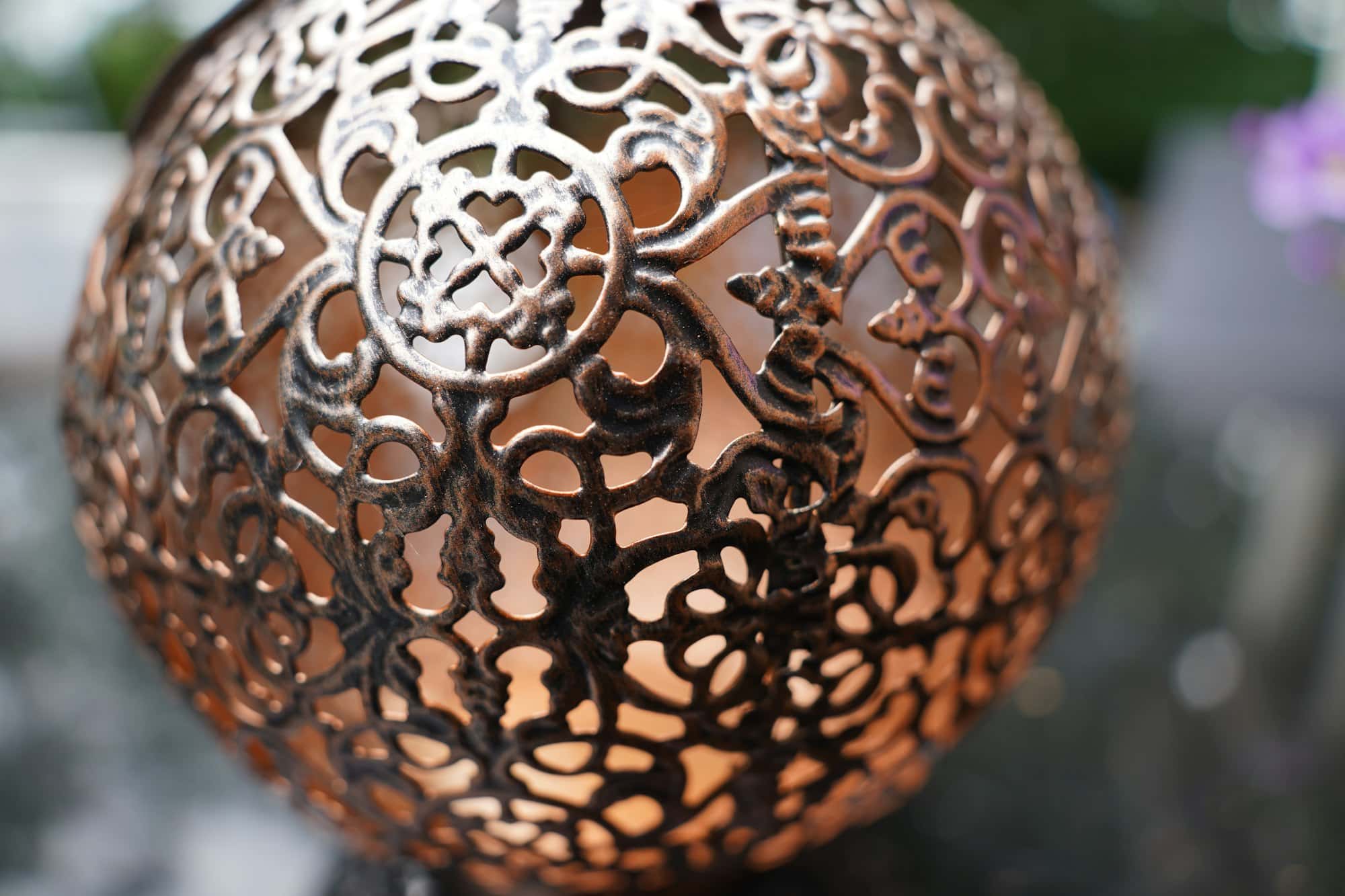
- Hand-punched: each opening is a single blow with a shaped punch, so the same shape repeats with small differences — a teardrop slightly fatter here, a dot slightly off the line there. On the inside face each hole has a small raised burr where the metal was pushed through.
- Laser-cut: every opening is identical and the edges are perfectly smooth, sometimes with a faint dark tint from the heat. There is no burr.
- Die-stamped: a whole section is punched at once by a press. The openings are identical and very crisp, and the metal is usually thin.
If you want to know what the hand process involves, we describe it in how a Moroccan lamp is hand-pierced.
2. Compare two repeats
Find the same motif in two places — two points of a star, two identical panels. By hand, they will match in design and differ in detail. By machine they will overlay exactly.
3. Use a magnet
Brass, copper and nickel silver are not magnetic. Steel is.
If a magnet sticks, the lamp is steel with a brass-coloured coating. That is not always a disaster for a lamp that stays indoors, but it will not age like brass: where the coating wears, the steel underneath can rust. We explain why we avoid plating altogether in why we stopped plating anything.
A magnet that sticks only at the fittings is normal — lamp holders and hanging hooks are often steel.
4. Feel the weight and the sheet
Solid brass is dense. A lamp in proper sheet feels heavier than it looks. Press gently on a flat panel with a fingertip: good sheet stays put; thin sheet flexes and may keep the dent.
5. Look at how it is joined
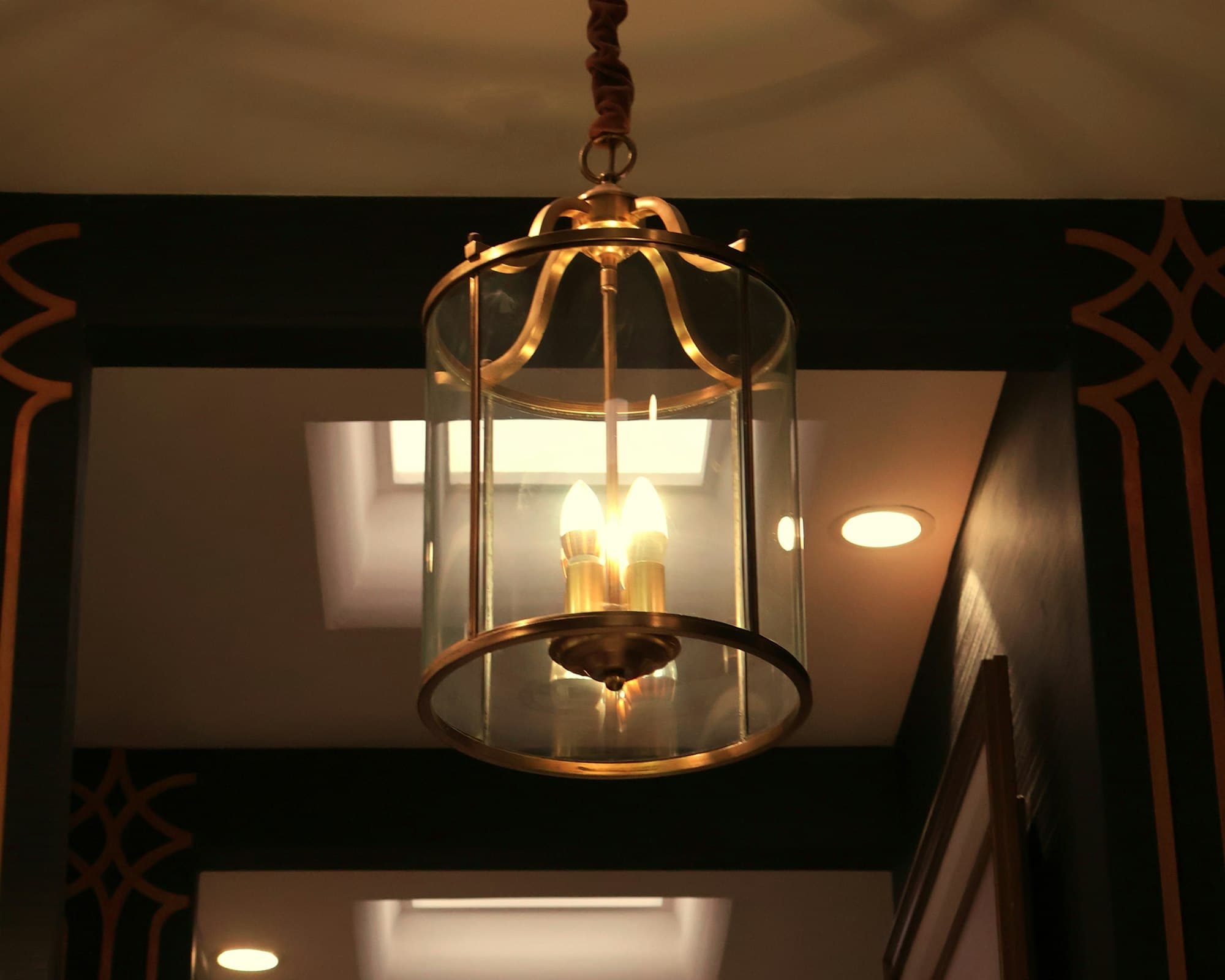
Turn it over, or look inside with a torch. Traditional lamps are assembled with small rivets, folded tabs and solder. Heavy glue, visible spot welds or plastic fittings are signs of a lamp made to a price.
What about the price?
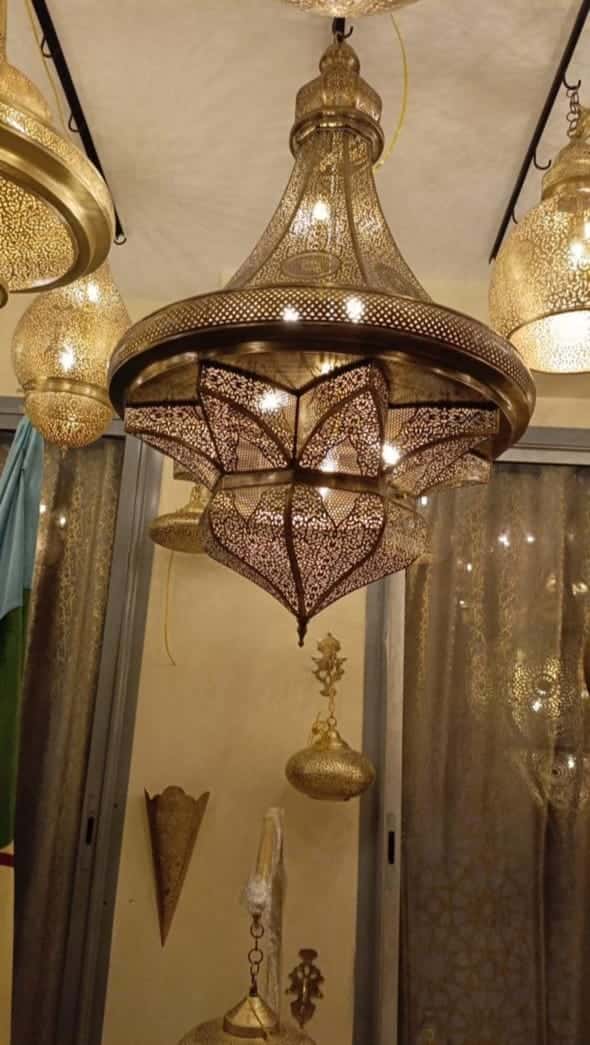
Price is a clue, not a proof. A large hand-pierced lamp represents days of work before the metal is counted, so it cannot be cheap. For reference, our Star chandelier, 1 m tall in solid brass, is 5,000 MAD at the workshop. A lamp of the same size for a fraction of that is almost certainly machine-cut, thin, plated, or all three.
In the souk
The same checks work in any market — carry a small magnet. A good seller will not mind, and many will tell you straight away which lamps are hand-pierced and which are not. We have more advice for buying in person in buying handmade metalwork from Marrakech.
Back to the complete guide to Moroccan brass lamps.
Questions people ask
- How can I tell if a lamp is solid brass?
- Hold a magnet against it. Brass is not magnetic, so a magnet that sticks means steel under a brass-coloured plating. On a hidden spot, a light scratch that shows grey or silver underneath also means plating.
- Is a laser-cut Moroccan lamp bad?
- Not necessarily — it can be well made. It is a different, cheaper product: perfectly regular, quicker to make, and often in thinner metal. It should be sold as machine-cut and priced accordingly.
- Why are some Moroccan lamps so cheap?
- Usually because of one or more of: laser or die cutting instead of hand piercing, thin sheet, or brass-plated steel instead of solid brass. Hand-piercing a large lamp takes days, which cannot be sold cheaply.
- authenticity
- moroccan lamps
- solid brass
- buying