A north-facing window
Why the light in a metal workshop decides what you are able to see, and therefore what you make.
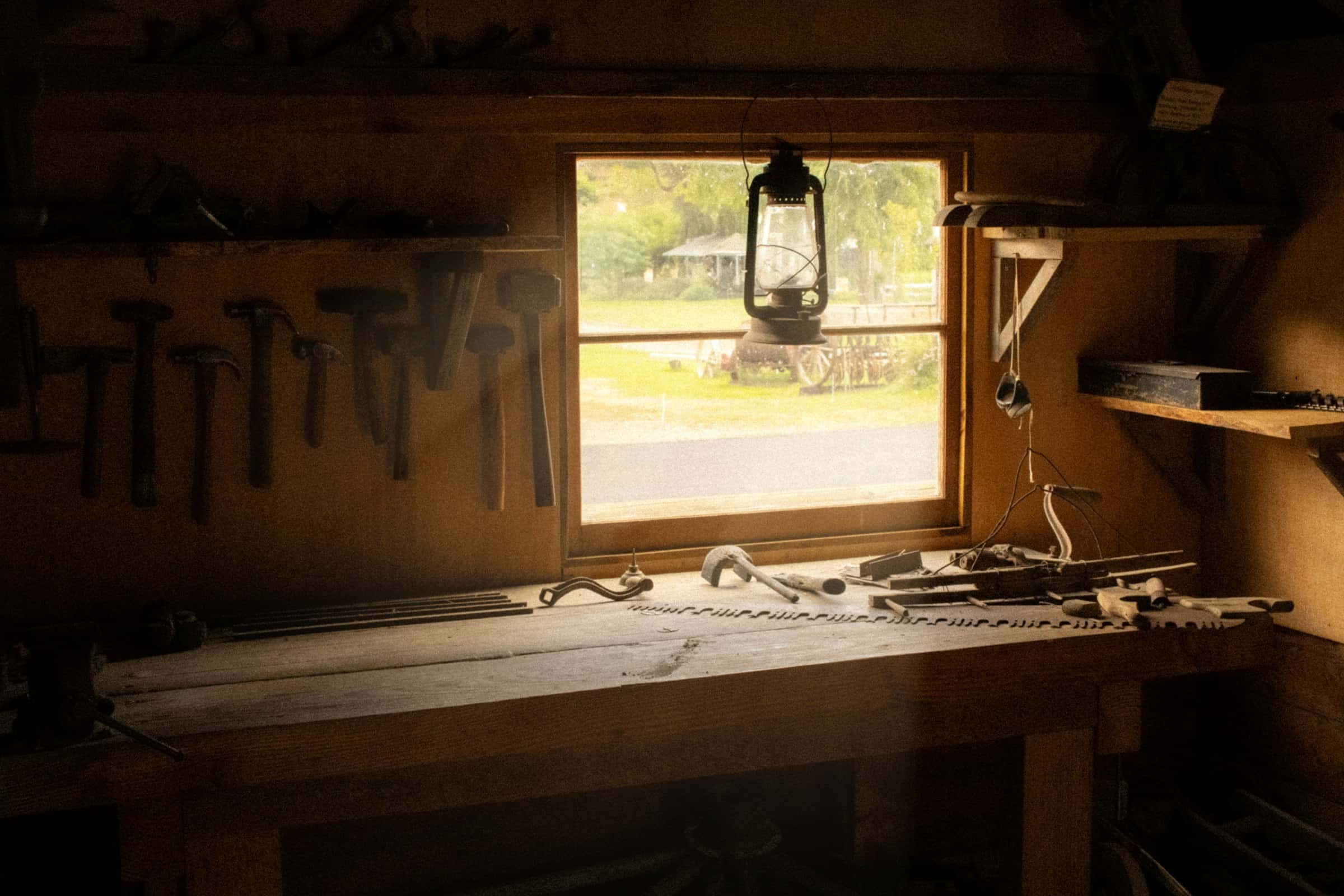
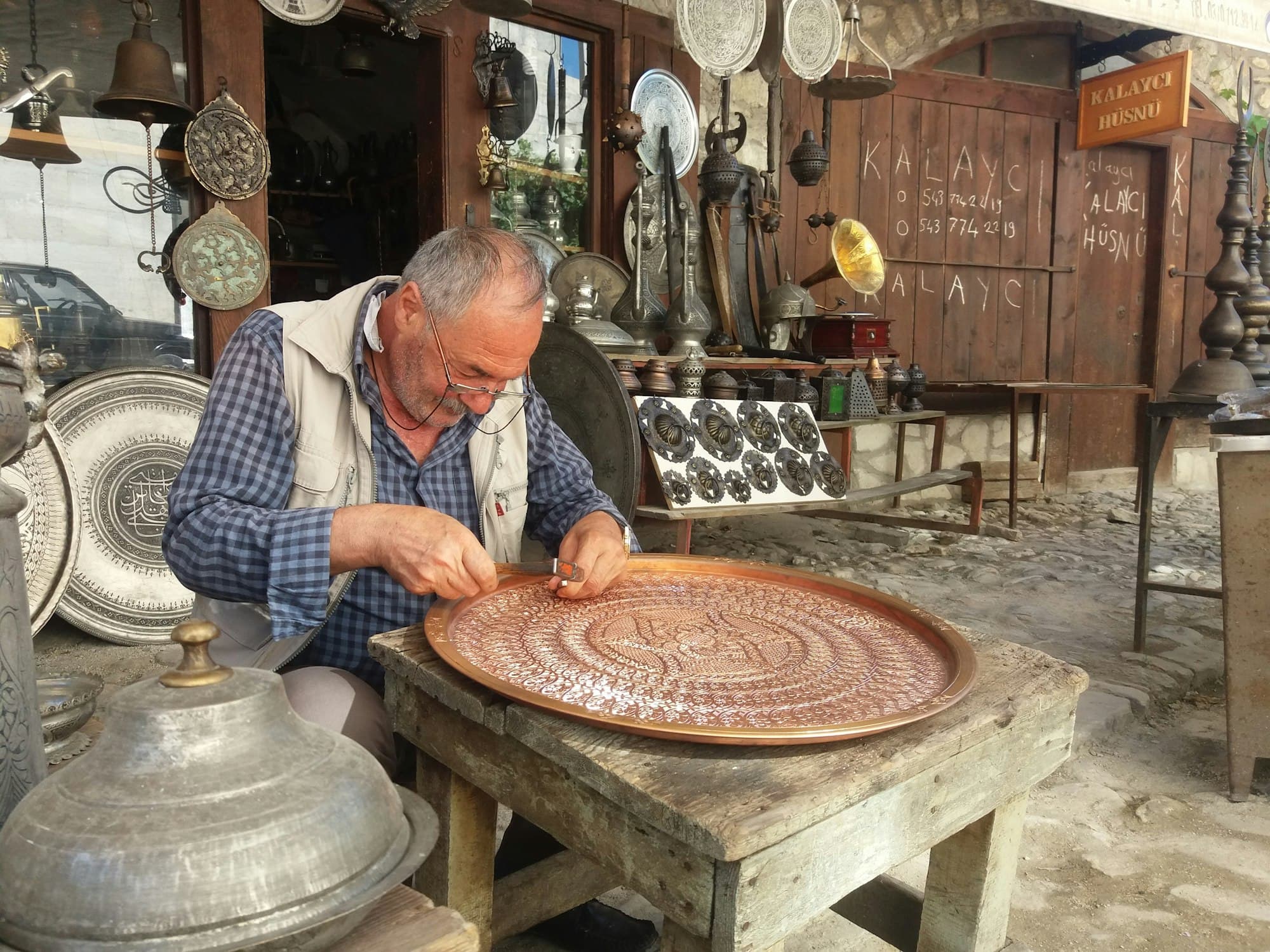
When we took the workshop in 2001 the previous occupant, a locksmith, had boarded over the large north window and worked under fluorescent tubes for thirty years. Taking the boards down was the first thing we did and probably the most consequential.
The problem with judging a surface
Metal has no colour of its own to speak of. What you are judging when you look at a planished bowl is a pattern of reflections, and reflections depend entirely on what is being reflected.
Under a point source — a bulb, a spotlight, a low sun through a west window — every facet either catches the source or does not. (It is the same physics that makes a clear bulb throw sharp patterns through a pierced lamp; see which bulb to use in a Moroccan lamp.) The surface reads as high contrast: bright spots against near black. Under those conditions a badly planished bowl and a well planished one look almost identical, because the contrast swamps the detail.
Under a large, even, diffuse source, each facet reflects a slightly different part of a broad field. The contrast collapses and what you see instead is form: the actual geometry of the surface, every hollow and high point.
A north-facing window is that second thing for most of the working day.
What it changes about the work
Three things, and they compound.
You planish differently. (Planishing is the last course of hammering — step 7 in anatomy of a forged bowl.) Under north light you can see the overlap of your own hammer strikes as you make them, which means you correct within the course rather than discovering the problem two days later.
You reject more. This is not a virtue, it is a consequence. Pieces that would pass under a tube do not pass under the window, so the standard rises whether or not you intended it to.
You stop trusting photographs. Almost every product photograph of metalwork is lit with a large soft source for exactly the reasons above, which flatters the surface. It is one reason we have been slow to photograph the catalogue: the honest picture of a raised bowl is a rather dull one, and the flattering picture tells you nothing about how the object will look on your table.
The hours
The trade-off is that north light is the same all day and then it is gone. From November to February we get from about half past eight until four, and finishing work stops when it does. The forge does not care and neither does casting, so those jobs move to the afternoon in winter and the finishing moves to the morning.
Which is how a window ends up organising a working week. The rest of the craft it serves is in our guide to Moroccan metalwork.
Questions people ask
- Why do metalworkers prefer north light?
- In the northern hemisphere a north-facing window gives even, indirect light for most of the day. On polished or hammered metal that shows the shape of the surface instead of a pattern of glare.
- workshop
- marrakech
- process