What a commission actually costs
The arithmetic behind a quote, and why the second piece is not half the price of the first.
People are often surprised by a commission quote in one direction or the other, and almost always because of the same misunderstanding: they assume the cost scales with the number of pieces. It does not. (For everything else about ordering from us — prices, visiting, shipping — see our guide to buying handmade metalwork from Marrakech.)
What you are actually paying for
A commission has four costs, and only one of them repeats.
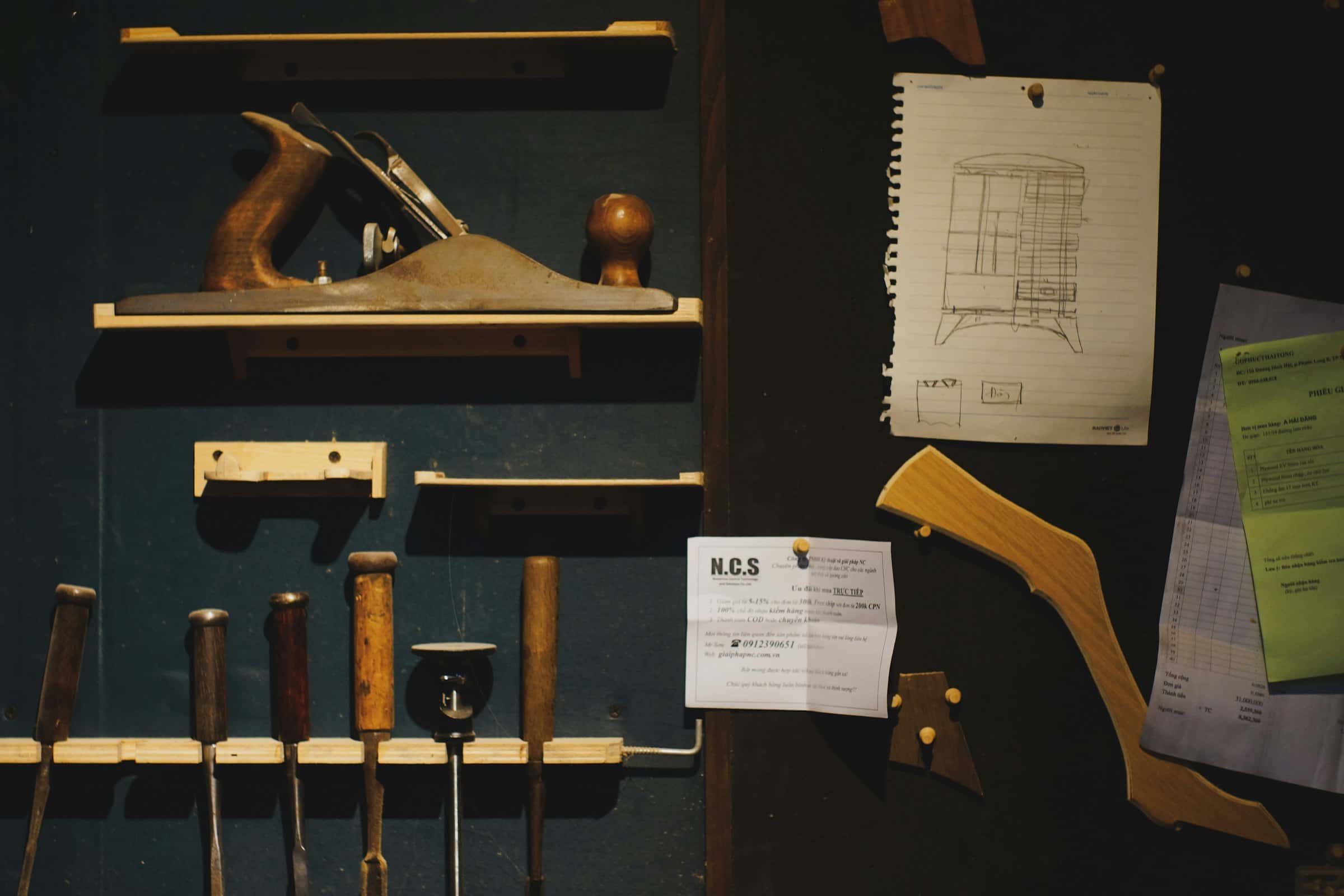
Design and pattern. Working out the form, then cutting a pattern if it is to be cast. Between four hours and three days. This happens once no matter how many pieces you order.
Setup. Tooling, jigs, and the first heat where you find out that the thing you drew does not behave the way you expected. Once per run.
Material. Bronze runs around 180 MAD a kilogram at the moment, brass a little less. It is rarely the largest number on the sheet, which surprises people most of all.
Making. Per piece, and the only line that scales.
For a single sconce, design and setup are most of the quote. For forty door pulls, they are a rounding error and you are essentially paying for hands and metal.
A real example
Studio Levant commissioned door pulls for a building last year: forty-two pulls, three lengths, matched finish.
- Pattern work, three lengths: 14 hours
- Setup and first casts: 9 hours
- Material, 61 kg bronze: about 11 000 MAD
- Making and finishing, 42 pieces: 63 hours
The first pull cost roughly 9 000 MAD to bring into existence. The forty-second cost about 1 400 MAD. Quoted as a single number the pulls came to 2 180 MAD each, which is above the price of our standard long pull and represents a considerable discount on what one bespoke pull would have cost.
Why we sample above six pieces
Anything over six, we make one first and post it to you before the run begins.
It is not a courtesy. A pattern error found on piece one costs a day. The same error found on piece thirty costs a month and a difficult conversation. The sample is the cheapest insurance available to both of us, and it is also the reason we can be firm about commissions being exempt from the fourteen-day return window — you have held the thing before we made the rest.
What makes a quote go up
Three things, in order of impact:
- Matching an existing piece you cannot send us. Photographs are not enough for a profile. If we cannot measure it, we are guessing, and guessing means a second sample.
- A deadline inside four weeks. The forge is not idle and someone else's job moves.
- A finish we do not do. We do not plate. If a project genuinely needs chrome, we will say so and recommend somebody.
What does not move the price much: complexity of form. Raising a difficult shape is what the workshop is for, and it is usually a smaller number than people expect.
If the piece is leaving Morocco, add the crate and the carrier — we explain how that works in shipping a Moroccan chandelier abroad. When you are ready, write to us with dimensions, the metal and your deadline.
Questions people ask
- How much does a custom brass piece cost in Morocco?
- It depends mostly on how many you order. Design and setup are paid once, so a single bespoke piece costs far more per unit than the same piece in a run of forty. Material is rarely the largest cost — bronze is around 180 MAD a kilogram.
- How long does a commission take?
- Four to six weeks from an agreed design. A deadline shorter than four weeks usually costs more, because other work on the bench has to move.
- Can I return a commissioned piece?
- Commissions are exempt from the fourteen-day return window. For runs of more than six pieces you approve a sample before the rest are made.
- commissions
- pricing
- process